What is a membrane filter? A complete guide to membrane filters for industrial water treatment.
Membrane filters are a key component of reverse osmosis systems . They play a crucial role in removing impurities from the water, and the quality of the treated water depends significantly on their efficiency. But what exactly is a membrane filter? How does it work? And what role does it play in industrial water treatment?
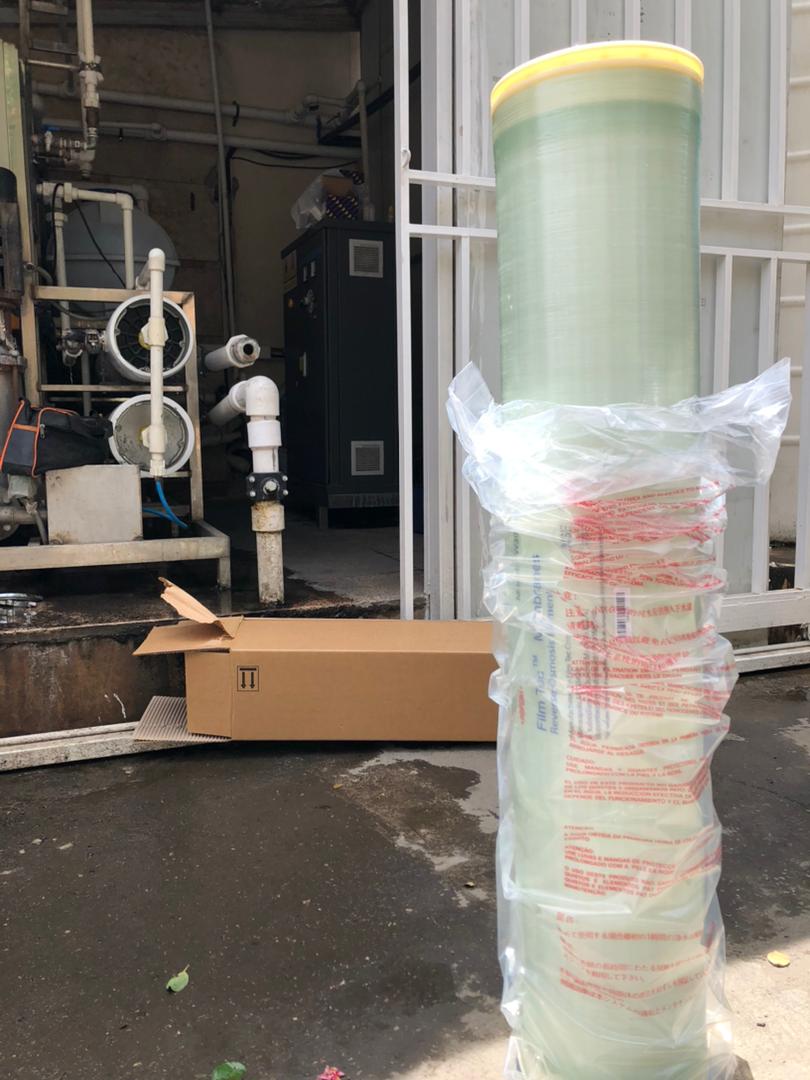
What is a membrane filter?
A membrane filter is a semipermeable membrane that allows water molecules to pass through but retains salts, ions, bacteria, and larger particles.
The filter consists of several thin polymer layers wound around a central tube. Water is forced through the membrane under high pressure; pure water molecules pass through the pores and are removed as permeable particles , while salts and impurities are retained and removed as sediment .
Structure and function of membrane filters
The membrane structure typically consists of three main parts:
-
Semipermeable membrane (polyamide layer): The main component for separating ions and salts.
-
Support layer: serves to increase the mechanical strength of the membrane.
-
Spiral sleeves and central pipe (permeable pipe): serve to collect purified water.
The membrane filtration process takes place under high pressure (typically 150 to 300 psi for salt water and up to 1000 psi for seawater).
Types of membrane filters
Depending on the application and type of water, membranes can be divided into several main categories:
-
Home-use membranes typically have a daily treatment capacity of 50 to 100 gallons.
-
Semi-industrial membranes: The daily processing capacity is between 400 and 1000 gallons.
-
Industrial membranes: designed for throughputs of over one cubic meter per hour up to hundreds of cubic meters per day.
The role of membrane filters in water treatment systems
The main function of the membrane in a reverse osmosis system is to remove the following substances:
-
Soluble ions (sodium, chloride, magnesium, calcium, etc.)
-
Organic and microbial materials
-
Suspended solids
-
Heavy metals such as lead and arsenic
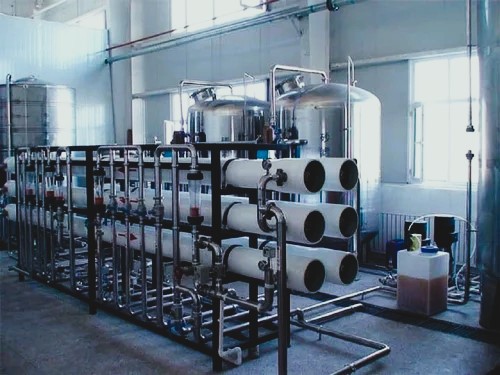
The total content of dissolved solids in the water leaving the membrane is therefore very low (less than 20 ppm) , making it an ideal choice for industries with high requirements for dissolved solids, such as the pharmaceutical industry, power plants, food processing and steam systems.
Factors that affect the lifespan of membrane filters
The membrane’s lifespan is typically two to five years, depending on operating and maintenance conditions. Key factors include:
-
Pre-filtration quality (sand filter, activated carbon filter, cartridge filter)
-
Prevent free chlorine from entering the membrane.
-
Water temperature and operating pressure control
-
Regular membrane cleaning (CIP)
-
Chemicals and water quality
How to distinguish genuine membrane filters from fakes
To distinguish genuine screen protectors from counterfeit ones, you should note the following:
-
Original packaging and factory seal
-
Enter the serial number and then scan the QR code.
-
Precise printing of logos and product information
-
It contains the official product catalog and information about the country of manufacture (e.g., USA, Japan or South Korea).
Reliable membrane brands include, among others, the following:
-
Teak wood (Dow/DuPont USA)
-
Toray Industries (Japan)
-
Hydranautics (USA)
-
Fontron (China – industrial quality)
When developing a water treatment system, selecting the right membrane is crucial.
The choice of membrane type should be based on an analysis of the incoming water quality, design pressure, water temperature, and recovery rate. Precise membrane design and selection are crucial in the following cases:
-
Improving system efficiency
-
Reduction of energy consumption
-
Extending the service life of devices
-
Reducing maintenance costs
In conclusion
Membrane filters are the heart of industrial water treatment plants; without them, reverse osmosis is impossible. The correct membrane selection and maintenance are crucial for the quality of the treated water and the stability of the system. Therefore, when purchasing or planning an industrial water treatment plant, particular attention should be paid to the membrane brand, its quality, and the operating conditions.