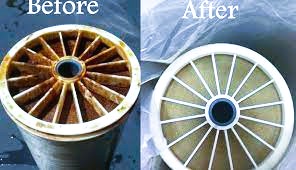
Cleaning cycle for reverse osmosis membranes | Time required, methods and important points
He represents
Membrane filters are an essential component of reverse osmosis systems, as they remove dissolved salts, ions, and impurities. During operation, minerals, suspended solids, and microbial sediments gradually accumulate on the membrane surface , leading to increased pressure drop, reduced flow rate, and a deterioration in wastewater quality. Therefore, regular cleaning cycles (CIP) are essential.
 Why do I need to clean my reverse osmosis membrane?
During system operation, factors such as high water hardness, the presence of silicon or iron, and microbial growth can lead to membrane blockages. These blockages can typically be divided into three main categories:
-
Mineral composition (size composition): Carbonate and sulfate composition
-
Organic contaminants: Fats and dissolved organic compounds
-
Microbial contamination (biological contamination): Growth of bacteria and biofilms
By cleaning the membrane in a timely manner, these blockages can be eliminated and its lifespan extended many times over.
 The best time to clean reverse osmosis membranes
The frequency and timing of membrane cleaning depend on the feedwater quality, system design
, and operating processes. However, according to international standards, membrane cleaning should be performed under the following conditions:
-
Compared to the baseline value, the infiltration flow decreased by more than 10–15%.
-
The reduction in blood pressure (ΔP) increases by more than 15%.
-
The total dissolved solids (TDS) or the conductivity (EC) of the wastewater exceeds the permissible limit.
-
Check the produced water for unusual changes in color or smell.
In industrial plants, membrane cleaning is typically performed every 3 to 6 months.
 General steps of membrane cleaning (CIP)
Membrane cleaning or stain removal processes essentially consist of two parts:
-
Alkaline cleaning: removes organic and biological contaminants.
-
Etching: Removes mineral and metal deposits.
Implementation phases:
-
Remove the system from the circuit and drain the water completely.
-
Prepare the cleaning solution in the CIP tank.
-
Alkaline solution (pH value approximately 10 to 11)
-
Acidic solution (pH 2 to 3)
-
-
The solution is injected into the membrane at a low flow rate , in the direction opposite to the flow of the water to be purified.
-
Rotate the solution for 30 to 60 minutes, monitoring the temperature (25 to 35 degrees Celsius) .
-
Rinse with neutral water until the pH of the wastewater reaches 6-7 .
 Commonly used chemicals for membrane cleaning
| Type of pollution | Solution types | Common chemicals | pH value of the solution |
|---|---|---|---|
| metal | sour | Citric acid, weak hydrochloride | 23 |
| organic deposits | alkaline | Sodium hydroxide (NaOH), a surfactant | 10-11 |
| microbial contamination | Alkaline bactericide | Sodium hydroxide + dechlorination | 10-11 |
 Basic methods for effective membrane cleaning
-
The solution was prepared using chlorine-free water with a low TDS value .
-
Monitor the temperature of the solution, as high temperatures can damage the membrane.
-
Select the flow direction of the wash water opposite to the flow direction of the cleaned water .
-
In case of severe blockage, a two-stage cleaning may be necessary (first with alkaline water, then with acidic water).
-
After completion of the flushing process, the system pressure and flow rate should be recorded to verify the effectiveness of the flushing process.
 Suitable membrane cleaning cycle in different systems
| System type | Water supply conditions | CIP-recommended courses |
|---|---|---|
| Industrial reverse osmosis system | Well water or tap water | Every 3 or 4 months |
| Semi-industrial equipment | Water use in urban areas | every 6 months |
| Seawater desalination plant | A salt solution with a high proportion of dissolved solids | Every two to three months |
| Microfiltration systems (medical and pharmaceutical) | clean water | Every one to two months |
 In conclusion
Cleaning reverse osmosis membranes is one of the most important maintenance steps for industrial water treatment plants.
Failure to adhere to the correct cleaning schedule and methods can lead to a significant drop in performance, increased energy consumption, and ultimately, premature membrane failure. Regular on-site cleaning
with standard cleaning agents and controlled temperatures restores the original system performance and reduces maintenance costs.