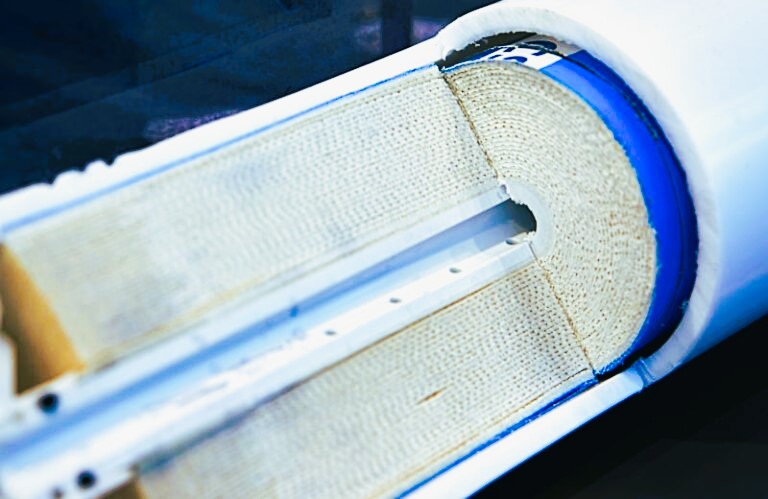
What is membrane regeneration?
Membrane regeneration encompasses a range of procedures for removing deposits, contaminants, and bacteria from the membrane surface and restoring its original performance. This process typically involves cleaning with specialized chemical solutions, controlling pH and temperature, and reversing the solution flow within the system.
 Indicators of demand for membrane renewal
Membrane regeneration is necessary if any of the following conditions occur in the system:
-
Blood pressure dropped by more than 15%.
-
Reduction of infiltration flow
-
Increase in total dissolved solids (TDS) or electrical conductivity (EC) in wastewater
-
Increase the frequency of CIP cleaning within a short period of time .
-
The water in the drain may change color or develop an unpleasant odor.
In this case, instead of a complete replacement of the expensive membrane, a basic regeneration can be an effective solution.
 Phases of reverse osmosis membrane regeneration
1. Initial examination and diagnosis of the type of obstruction
First, the sedimentation type must be determined. Analyzing parameters such as pH, hardness, iron, manganese , and silicon content in the feed water and comparing them with design data helps in determining the sedimentation type.
Sedimentation is typically divided into three categories:
-
Mineral deposits (size of the accumulation)
-
organic soil
-
Microbial contamination (biological contamination)
2. Preparation of the CIP (Cleaning-in-Place) solution.
Choose the appropriate cleaning fluid depending on the type of blockage:
-
Alkaline solutions (pH ≈ 10-11): are used to remove organic and microbial impurities.
-
Acidic solutions (pH ≈ 2-3): In some cases of mineral and metallic deposits,
a two-stage combination (alkaline + acidic) is recommended to fully restore the membrane .
3. Distribution of the solution within the system.
-
The solution prepared by the circulation pump enters the membrane via the return path.
-
The solution must flow slowly and evenly to avoid damaging the membrane surface.
-
For optimal results, the solution temperature should be set between 25 and 35 degrees Celsius.
-
The course usually lasts 30 to 60 minutes .
4. Rinse and neutralize
After regeneration, flush the system several times with chlorine-free water with a low total dissolved solids (TDS) content to remove all chemical residues.
The pH of the wastewater should be between 6 and 7.
5. Final membrane performance test
Finally, the inlet pressure, permeate flow rate, and total dissolved solids (TDS) content in the purified water are measured and compared with the initial values. If these parameters return to the expected values, the membrane regeneration is considered successful.
 Equipment required for membrane renewal
-
The tank for on-site cleaning is made of acid-resistant polyethylene.
-
Corrosion-resistant circulation pump
-
Install a filter cartridge in front of the membrane to prevent the ingress of suspended particles.
-
Precision thermometers and pH meters
-
Flow and pressure control valves
 Key points regarding the regeneration of reverse osmosis membranes
-
Always use chlorine-free water when preparing solutions .
-
The chemical concentrations should be adjusted according to the membrane manufacturer’s instructions.
-
Avoid direct contact between strong acids and polyamide films .
-
In cases of severe constipation, treatment should be carried out in two steps (first with an alkaline solution, then with an acidic one).
-
Recording data before and after regeneration is crucial for analyzing membrane performance.
 The best time to restore cell membranes
Membrane regeneration cycles vary depending on operating conditions, but on average:
-
In industrial plants: every 3–6 months
-
In semi-industrial plants: once every 6–9 months.
-
If efficiency is reduced by more than 15% , an immediate upgrade is recommended.
 Advantages of membrane regeneration compared to membrane replacement
| Comparable cases | Membrane renewal | Membrane replacement |
|---|---|---|
| Implementation costs | Less (save up to 70%) | higher |
| The system has failed. | Briefly (a few hours) | long |
| Membrane age | It increases | I need to buy it again. |
| New equipment is needed | NO | Yes |
 In conclusion
Reverse osmosis membranes are an effective and cost-efficient method for restoring the performance of a reverse osmosis system. Through proper cleaning, the selection of suitable chemicals
, and precise temperature and pH control, membrane efficiency can be restored to over 90% of its original state.
Regular regeneration processes extend the lifespan of the membrane, reduce maintenance costs and ensure stable water quality.