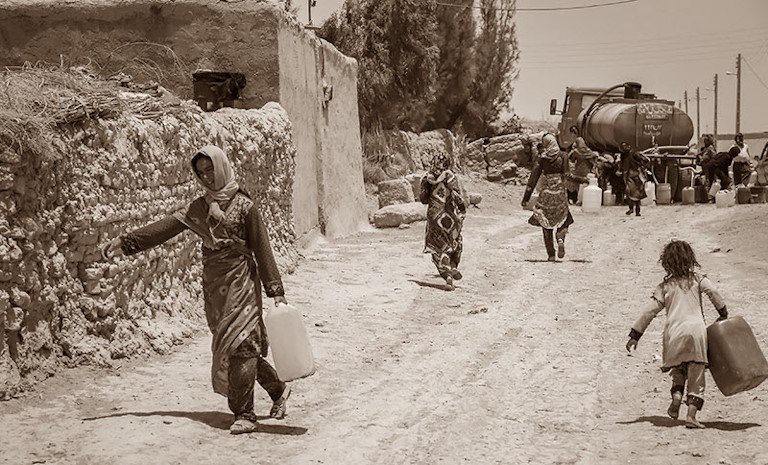
The water crisis in Iran is one of the country’s most serious environmental and social challenges. Declining rainfall, climate change, overexploitation of groundwater, and poor management have led to severe water shortages in many provinces. Water stress maps from recent years have shown that large parts of the country are suffering from water scarcity and even drought. This article examines the Iranian provinces affected by water scarcity, the causes of the crisis, and offers recommendations for addressing the problem.
1. Which provinces of Iran are affected by water shortages?
1:1. Sistan and Baluchistan
This southeastern province is one of the driest regions in Iran. Lack of rainfall, the drying up of the Hamun wetlands, and the heavy dependence on water from the Afghan border (the Helmand River) have caused numerous problems for local residents. Many villages rely on cisterns for their water supply.
1-2. Kerman
Kerman, Iran’s largest province, is facing a severe groundwater crisis due to the cultivation of high-value crops such as pistachios and citrus fruits. The groundwater level has dropped significantly, leading to the drying out of many of the province’s plains.
1-3. Yazd
Yazd, known as the “world’s first mud-brick city,” has long suffered from water scarcity . The province has virtually no surface water resources and relies primarily on pipelines and water transfers. Climate change and population growth are further exacerbating this situation.
1-4. South Khorasan Province
This province is one of Iran’s desert regions. Insufficient rainfall and persistent drought have severely impacted groundwater resources. Although saffron and date cultivation are economically viable, they still require appropriate water management.
1-5. Isfahan
The drying up of the Zayand River is one of the most striking manifestations of the severe crisis that Isfahan has faced in recent years due to lack of rainfall and excessive water use in agriculture and industry.
1-6. Hormozgan
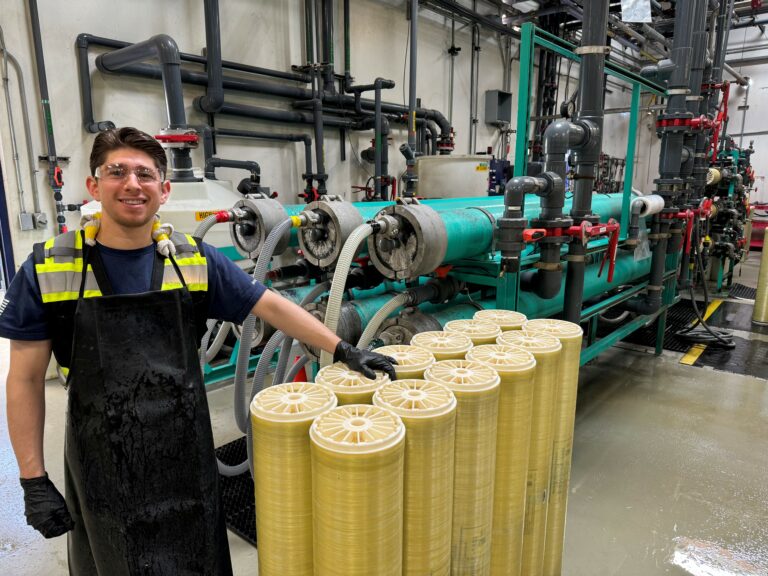
Hormozgan Province, with its hot, dry climate and lack of freshwater, is suffering from a severe shortage of freshwater. Seawater desalination is an important solution to this problem.
1–7. Tehran, Qom and Alborz
The central provinces are facing increasing water demand due to population growth and industrial concentration. Decreasing snowfall and falling groundwater levels in the Alborz Mountains threaten the water supply in these areas.
2. The main causes of water crises in water-stressed provinces
-
Low rainfall and climate change: Many of these provinces are located in arid and semi-arid regions where climate change is leading to low rainfall.
-
Unsustainable use of resources : overexploitation of groundwater and lack of appropriate consumption patterns.
-
Incorrect agricultural practices : growing water-intensive crops in water-scarce areas.
-
Population growth and urban expansion : The demand for drinking and industrial water is increasing.
-
Infrastructure deterioration : water losses in water transport and distribution networks.
Theory of ion and water transport in reverse osmosis membranes
3. Consequences of water scarcity in different provinces
-
Forced migration : In some regions, such as Sistan and Baluchistan or South Khorasan Province, water scarcity has led to the migration of rural populations.
-
Agricultural crisis : Agricultural production has declined and farmland has been destroyed.
-
Social problems : Local tensions due to land rights and water issues.
-
Environmental damage : drying up of wetlands and rivers, loss of biodiversity.
4. Measures to address water shortages in several provinces
4-1. Changes in agriculture
Reducing the area under water-intensive crops such as rice and watermelons in drylands and replacing them with less water-intensive crops such as saffron, pistachios and medicinal plants.
4-2. Development of modern irrigation systems
Use drip irrigation, sprinkler irrigation and smart irrigation instead of traditional, wasteful methods.
4.3. Water recycling
Treatment and reuse of municipal and industrial wastewater for irrigation of green spaces and for industrial purposes.
4-4. Desalination of seawater
In southern provinces such as Hormozgan, Bushehr, and Khuzestan, sugar-added technology can meet some beverage needs.
4-5. Groundwater resource management
Sealing of unlicensed wells, installation of smart meters, and artificial recharge of groundwater during the rainy season.
4-6. Cultural Development and Education
Raising public awareness of the importance of water conservation in households, schools and the media.
4-7. Use of new technologies
Using artificial intelligence, satellite data, and the Internet of Things to manage water resources and monitor consumption.
5. The role of the government and the people
Addressing the water crisis requires more than just government action. Citizens, farmers, and industry must also actively participate in water resource management. Governments can facilitate this process by developing appropriate strategies, providing financial support, and creating platforms for participation.
6. Conclusion
Iran’s water-scarce provinces, from Sistan and Baluchestan to Yazd and Isfahan, face water crises of varying severity. Climate conditions significantly influence this crisis, but unsustainable resource use and consumption patterns also play a role. Solutions such as improved agricultural practices, water reuse , modern technologies, and increased public awareness could be crucial for the future of Iran’s water resources.
Ultimately, solving the water crisis requires a national vision, decisive decisions, and citizen participation . If we don’t act today, not only will many provinces suffer severe water shortages tomorrow, but Iran’s food supply and social and economic security will also be at risk.