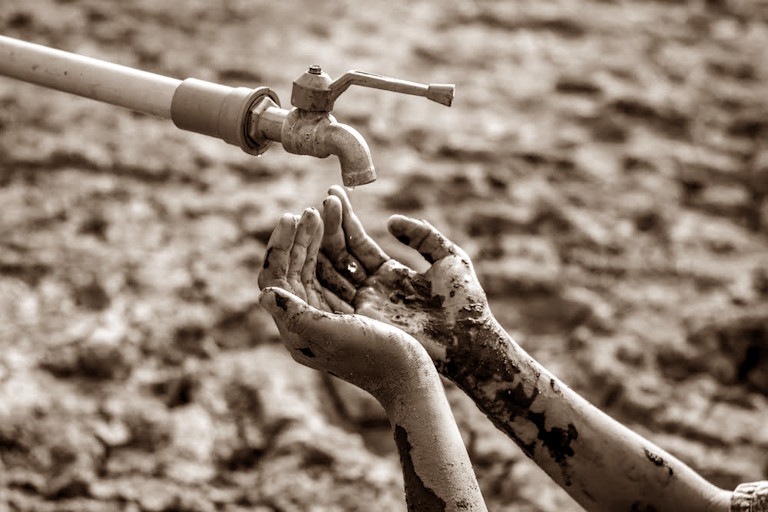
The Iranian water crisis is no longer just a warning; it has become an undeniable reality, threatening the lives of millions of people, food security, and even the country’s socioeconomic stability. Declining rainfall, climate change, unsustainable resource use, overexploitation of groundwater, and unsustainable consumption have made Iran one of the most water-stressed countries in the world. Under these circumstances, solutions to this crisis must be multidimensional and coordinated, based on the joint participation of citizens, the government, and the private sector. Below is an analysis of some key solutions to the Iranian water crisis.
1. Reform of sustainable agricultural models
Agriculture accounts for over 80% of the country’s water consumption. This high level is due to the use of traditional irrigation methods, the cultivation of water-intensive crops in arid regions, and ineffective scientific water resource management.
Solution:
-
Development of modern irrigation systems : The use of drip irrigation, sprinkler irrigation and intelligent systems can reduce water consumption by up to 40%.
-
Change cropping patterns : In water-scarce areas, water-intensive crops such as rice and watermelons should be replaced by drought-tolerant crops such as saffron, pistachios or medicinal plants.
-
Use of new technologies : Use of the Internet of Things and artificial intelligence to precisely control irrigation and predict actual plant needs.
-
Farmer training : changing traditional concepts and improving farmers’ knowledge of water productivity.
2. Water recycling and reuse
Greywater , municipal and industrial wastewater, is a hidden and valuable resource. In many industrialized countries, up to 90% of treated wastewater is recycled, but in Iran, this percentage is negligible.
Solution:
-
Create a waste recycling and processing network in the city.
-
Use of treated wastewater for irrigation of green spaces, in industry and even for some agricultural purposes.
-
Create a culture of acceptance of water reuse among the public and industry.
3. Groundwater resource management
More than half of the country’s aquifers are in critical or limited condition. Overexploitation, illegal drilling, and declining rainfall are seriously endangering these vital water resources.
Solution:
-
Closure of illegal wells and strict control of oil production.
-
Install smart meters to monitor water consumption .
-
The underground aquifer is artificially recharged by surface water during the rainy season.
-
Integrated watershed management will be introduced, eliminating regional or administrative management.
4. Reduction of urban and private consumption
Although the share of domestic consumption is small compared to agriculture , its cultural and social importance is great.
Solution:
-
Install energy-efficient appliances, such as energy-efficient faucets and showers.
-
Development of intelligent systems for meter reading and consumer information.
-
Raising public awareness and promoting a culture of savings, particularly in schools and the media.
-
Realistic water prices are consistent with social justice and encourage people to save.
Technical data of the saltwater purification system
5. Use alternative water sources.
-
Desalination : In the southern region and along the Persian Gulf coast, modern desalination technology can meet part of the drinking water demand.
-
Rainwater harvesting : The construction of reservoirs and infrastructure in cities and towns to store rainwater.
-
Fog collectors and new technologies : In some mountainous and arid areas, the use of fog and water vapor collection technologies can be beneficial.
6. The role of government and policy development
Solving the water crisis requires more than just technology: it also requires political will and decisive decisions.
Solution:
-
Development of a comprehensive national water resources plan with the participation of all stakeholders.
-
Pass strict laws to protect water resources.
-
Providing financial support and opportunities for innovative projects in waste management and recycling.
-
Reform support policies to avoid misallocation of financial resources in the consumption-intensive agricultural sector.
7. Public and private sector participation
Sustainable solutions are not possible without public participation. The private sector can also play a key role in developing technologies and implementing water projects.
Solution:
-
— Education and cultural development in the media, schools and universities.
-
Promote the use of products with low water content.
-
Creating a platform for collaboration with the private sector on water treatment and recycling projects.
8. Pay attention to climate change.
Iran is one of the countries most affected by climate change. Global warming and changing precipitation patterns are exacerbating the water crisis.
Solution:
-
Conducting scientific research related to climate change adaptation .
-
Strengthening flood protection infrastructure to store rainwater.
-
Reducing greenhouse gas emissions and switching to renewable energy sources.
9. The role of innovation and new technologies
Technology can be a key tool in solving the water crisis. We are finding new solutions, from artificial intelligence to nanotechnology.
Example:
-
Intelligent sensors for monitoring soil moisture.
-
Nanofilters clean water quickly.
-
Drones for agricultural monitoring and resource management.
-
Use of satellite data for watershed management.
10. Conclusion
Iran’s water crisis is not a temporary problem, but a strategic challenge that requires a comprehensive approach, bold decisions, and comprehensive cooperation. The solution lies in a combination of consumption system reform, technological development, effective governance, sound policies, and cultural change. If we fail to act now, not only our water resources but also the country’s sustainable development and national security will be at risk.
Therefore, the water crisis can only be overcome through smart governance, social interaction, and innovation . Now is the time to make difficult but necessary decisions.